


Specialization
Assoc. Prof. Dr. Ali Öner’s main areas of orthopedic practice include spine surgery, arthroplasty, arthroscopy, limb deformity surgery, orthopedic trauma, and foot and ankle surgery.
This page provides a general overview of the orthopedic conditions and treatment areas evaluated within these fields.
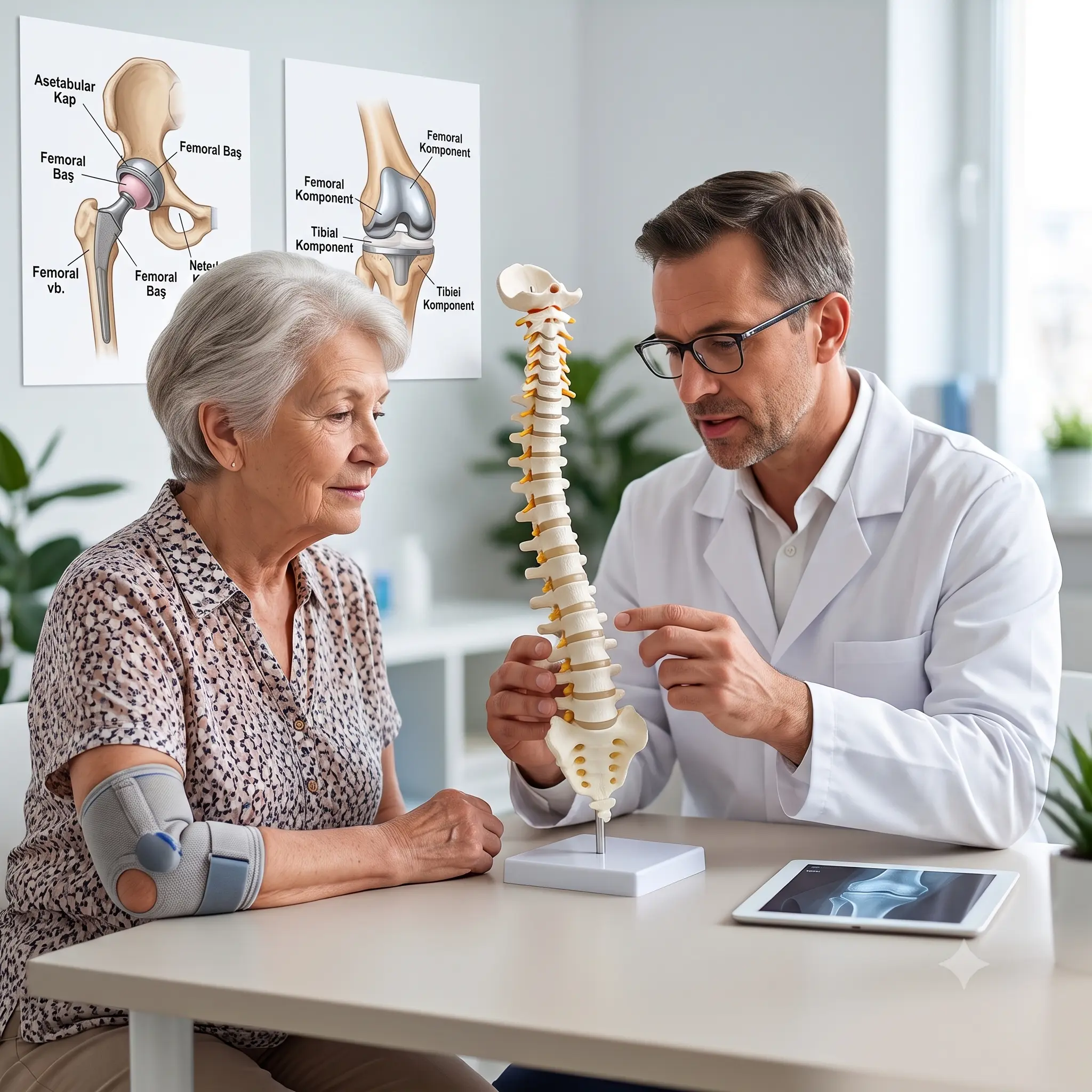
Main Specialization Areas
Orthopedic conditions are evaluated according to the patient’s symptoms, physical examination findings, imaging results, age, activity level, and expectations. The aim is to choose the most appropriate treatment path for each patient.
Spine Surgery
Evaluation and treatment planning for scoliosis, kyphosis, disc herniation, spinal stenosis, spondylolisthesis, spine deformities, and nerve compression.
Arthroplasty / Joint Replacement
Evaluation and surgical planning for hip and knee arthritis, hip replacement, knee replacement, complex joint deformities, and revision joint replacement.
Arthroscopy / Sports Surgery
Evaluation of meniscus tears, ligament injuries, cartilage problems, shoulder disorders, joint pain, and selected sports-related orthopedic conditions.
Limb Deformity Surgery
Evaluation and treatment planning for limb alignment problems, angular deformities, leg length discrepancy, congenital deformities, and complex skeletal deformities.
Orthopedic Trauma
Assessment and treatment planning for fractures, pelvis and acetabulum injuries, joint fractures, malunions, nonunions, and complex orthopedic trauma.
Foot and Ankle Surgery
Evaluation of foot and ankle deformities, painful bunion deformity, hallux rigidus, flatfoot, ankle problems, and selected reconstructive procedures.
Evaluation and Treatment Planning Approach
Orthopedic treatment is not planned according to imaging findings alone. A safe and effective treatment decision requires clinical examination, patient history, imaging results, functional expectations, and the patient’s general health status to be evaluated together.
Clinical Examination and Assessment
Pain location, duration of symptoms, walking capacity, joint motion, posture, neurological findings, deformity, and daily functional limitations are evaluated in detail.
Imaging and Diagnostic Planning
X-rays, MRI, CT scans, standing alignment radiographs, or other diagnostic tests may be used when necessary. Imaging results are interpreted together with the physical examination.
Personalized Treatment Decision
Treatment may include observation, exercise, physical therapy, injections, arthroscopy, joint replacement, deformity correction, trauma surgery, or spine surgery depending on the patient’s condition.
Patient Education Pages
The following pages provide patient-friendly information about common orthopedic conditions and treatment topics such as lower back and neck problems, spinal deformities, joint replacement, and congenital shoulder–scapular disorders.
Lumbar Disc Herniation
Leg pain, numbness, weakness, diagnosis, and treatment options.
Cervical Disc Herniation
Arm pain, numbness, weakness, and situations that may require surgical treatment.
Adolescent Idiopathic Scoliosis
Spinal curvature during adolescence, follow-up, bracing, and the surgical decision-making process.
Kyphosis
Rounded back, postural problems, Scheuermann’s kyphosis, and treatment options.
Hip Replacement
Hip arthritis, pain, limited mobility, hip replacement surgery, and the recovery process.
Knee Replacement
Knee arthritis, walking difficulty, knee replacement surgery, and the rehabilitation process.
Sprengel Deformity
High-riding shoulder blade, shoulder asymmetry, omovertebral bone, and surgical treatment options.
Foot and Ankle Problems
Bunion deformity, hallux rigidus, flatfoot, ankle problems, walking difficulties, and selected foot and ankle conditions.
Not sure which specialization area is right for you?
If you are not sure which specialization area applies to your condition, your symptoms, previous test results, and examination findings can be evaluated together to plan the most appropriate next step.