


Foot and Ankle Surgery
Foot and ankle surgery focuses on the evaluation and treatment planning of deformities, pain, weight-bearing problems, toe deformities, tendon problems, joint arthritis, and walking difficulties affecting the foot and ankle.
Bunion deformity, hallux rigidus, flatfoot, toe deformities, ankle problems, post-traumatic conditions, and selected foot and ankle deformities may be evaluated within this field.
Short answer
Foot and ankle surgery covers the evaluation of conditions that cause pain, deformity, weight-bearing problems, or walking difficulty in the foot and ankle.
Not every foot problem requires surgery. The treatment decision is based on symptoms, foot alignment, severity of deformity, joint range of motion, tendon and ligament balance, imaging findings, shoe use, daily life expectations, and associated orthopedic problems.
Which conditions are evaluated in foot and ankle surgery?
Foot and ankle surgery covers the evaluation of pain, deformity, weight-bearing problems, walking difficulty, joint arthritis, tendon-ligament problems, and post-traumatic conditions affecting the foot and ankle. Treatment planning is based on deformity type, symptoms, foot alignment, joint range of motion, imaging findings, and daily life expectations.
Bunion Deformity
Bunion deformity, also known as hallux valgus, is evaluated in terms of pain, shoe-wearing difficulty, toe alignment, and walking impact.
Hallux Rigidus
Pain and limited motion caused by arthritis of the big toe joint are evaluated together with joint range of motion, walking impact, and shoe use.
Flatfoot
Decreased arch height, inward foot collapse, heel alignment problems, and walking difficulties are evaluated differently in children and adults.
Toe Deformities
Hammer toe, claw toe, overlapping toes, and alignment problems that cause pain, callus formation, or shoe-wearing difficulty are assessed.
Ankle Problems
Ankle pain, arthritis, instability, recurrent sprains, alignment problems, and post-traumatic conditions are evaluated within the overall foot and ankle structure.
Post-Traumatic Foot and Ankle Problems
Problems after foot and ankle fractures, malunion, nonunion, stiffness, pain, and weight-bearing difficulty may be evaluated.
How are foot and ankle problems evaluated?
Evaluation in foot and ankle surgery is not based only on the location of pain or X-ray findings. Foot alignment, deformity type and severity, joint range of motion, tendon-ligament balance, walking pattern, shoe use, age, activity level, and daily life expectations are evaluated together.
1. Clinical Examination and Symptom Assessment
Pain location, duration, relation to shoe use, callus formation, swelling, deformity, joint motion, tendon function, and daily life impact are evaluated.
2. Weight-Bearing and Gait Assessment
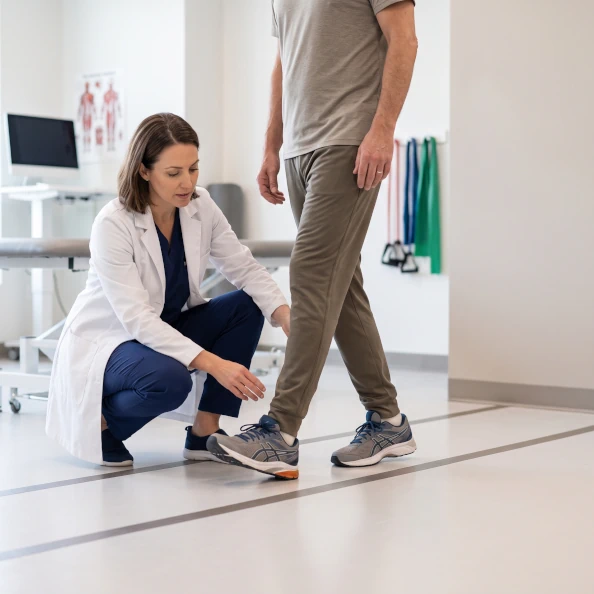
Standing posture, inward or outward foot positioning, heel alignment, arch height, toe loading, walking pattern, and, when needed, overall lower limb alignment are assessed together.
3. Imaging and Joint Evaluation
Weight-bearing X-rays are important for evaluating joint relationship, arthritis, deformity severity, and bone alignment. CT or MRI may be used when more detailed evaluation of joints, tendons, ligaments, or cartilage is needed.
4. Personalized Treatment Plan
Treatment may include shoe modification, insoles, exercises, physical therapy, injections, observation, or surgery depending on symptoms, deformity type, and functional needs.
How are treatment options selected in foot and ankle surgery?
Treatment for foot and ankle problems is selected according to the cause of symptoms, severity of deformity, joint range of motion, foot alignment, tendon-ligament balance, imaging findings, and daily life expectations. Not every foot problem requires surgery; many patients can be managed with shoe modification, insoles, exercises, or observation.
- Shoe Modification, Insoles, and Observation
- Exercises, Physical Therapy, and Supportive Treatments
- Bunion Deformity and Toe Deformities
- Flatfoot and Alignment Problems
- Ankle Arthritis, Trauma, and Revision
In mild deformities, weight-bearing problems, or painful conditions that do not require surgery, shoe selection, insoles, toe spacers, activity modification, and regular observation may be recommended.
This approach is planned according to pain severity, risk of progression, shoe-wearing difficulty, and daily life expectations.
Exercises and physical therapy may have a supportive role in some foot and ankle problems related to tendon, ligament, muscle balance, or walking pattern.
The goal is to reduce pain, preserve joint motion, support muscle-tendon balance, and improve daily function.
In bunion deformity, hallux rigidus, hammer toe, claw toe, or overlapping toes, treatment is selected according to deformity severity, pain, shoe use, joint motion, and walking impact.
When surgery is needed, the goal is not only to improve appearance, but also to reduce pain, improve toe alignment, and support shoe comfort.
Flatfoot, inward foot collapse, heel alignment problems, and ankle loading problems are evaluated differently in children and adults.
Treatment may include observation, insoles, physical therapy, or surgery depending on age, flexibility, pain, progression, tendon function, ankle alignment, and daily life impact.
More detailed evaluation may be needed in ankle arthritis, recurrent sprains, instability, pain after fractures, malunion, nonunion, or implant-related problems.
Joint surface, alignment, bone quality, soft tissue condition, previous surgeries, and functional expectations are important in treatment planning.
When is surgery considered in foot and ankle problems?
The decision for foot and ankle surgery is not based only on the visible deformity. Pain, shoe-wearing difficulty, walking impact, deformity severity, joint range of motion, tendon-ligament balance, weight-bearing problems, and daily life expectations are evaluated together.
Some foot and ankle problems can be managed with shoe modification, insoles, exercises, physical therapy, or observation. However, surgery may be considered when pain significantly affects daily life, deformity progresses, shoe use becomes difficult, walking function is impaired, or joint arthritis is present.
The goal is not only to improve the shape of the foot. Treatment aims to reduce pain, improve weight-bearing balance, support toe and ankle alignment, improve shoe comfort, and preserve walking function.
Surgery may be considered in the following situations:
- Foot pain affecting daily life
- Bunion deformity that makes shoe use difficult
- Advanced toe deformities
- Severe stiffness of the big toe joint
- Painful flatfoot or inward foot collapse
- Ankle alignment problems
- Post-traumatic malunion
- Nonunion or implant-related problems
- Advanced ankle arthritis
- Deformities that impair walking function
Important: Medical evaluation should not be delayed in cases of sudden severe pain, inability to bear weight after trauma, obvious deformity, open wound, circulation problems, bluish discoloration, coldness, loss of sensation, weakness, or signs of infection.
Common misconceptions about foot and ankle surgery
Treatment decisions in foot and ankle problems are not based only on visible deformity or X-ray findings. Pain, weight-bearing pattern, walking impact, joint motion, tendon-ligament balance, shoe use, and daily life expectations should be evaluated together.
No. Mild bunion deformities that do not significantly affect daily life may be managed with shoe modification, toe spacers, and observation. Surgery is considered according to pain, deformity severity, shoe use, and walking impact.
You can schedule an evaluation for foot pain, weight-bearing problems, or walking difficulty
For bunion deformity, hallux rigidus, flatfoot, toe deformities, ankle pain, post-traumatic foot and ankle problems, or walking difficulty, a face-to-face orthopedic evaluation is needed to plan the most appropriate treatment.
This page was prepared based on Dr. Ali Öner’s clinical evaluation approach in orthopedics and traumatology and has been medically reviewed.
Last updated: August 29, 2026