


Limb Deformity Surgery
Limb deformity surgery focuses on the evaluation and treatment planning of congenital or acquired deformities of the arms, legs, hips, knees, ankles, and feet.
Leg bowing, limb length discrepancy, alignment problems, congenital deformities, post-traumatic malalignment, nonunion, malunion, and selected foot and ankle deformities may be evaluated within this field.
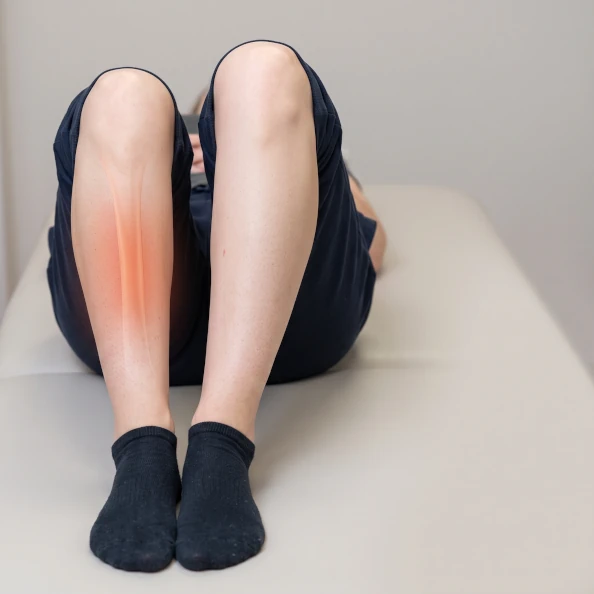
Short answer
Limb deformity surgery covers the evaluation of shape, alignment, and length differences in the arms and legs. These problems may be congenital or may develop after trauma, infection, growth plate injury, previous surgery, or bone healing problems.
Treatment decisions are not made based on X-rays alone. The patient’s age, growth potential, location and severity of the deformity, walking pattern, functional limitation, pain, and daily life expectations are evaluated together.
Which conditions are evaluated in limb deformity surgery?
Limb deformity surgery covers the evaluation of shape, length, and alignment problems affecting the arms and legs. Congenital deformities, growth plate problems, post-traumatic malalignment, nonunion, malunion, limb length discrepancy, and foot-ankle deformities may be evaluated within this field.
Leg Bowing
Inward or outward bowing of the thigh, leg, or knee area may affect walking pattern, joint loading, pain, and the risk of progressive deformity.
Limb Length Discrepancy
Leg length differences caused by congenital problems, growth plate injury, trauma, infection, or previous surgery are evaluated according to age, growth potential, and functional impact.
Congenital Deformities
Bone, joint, or limb alignment problems present from birth are evaluated together with growth, walking development, functional status, and the risk of progression.
Post-Traumatic Deformities
Angulation, rotational problems, shortening, joint surface problems, or alignment disorders that develop after fractures, growth plate injuries, infection, or previous surgery may be evaluated.
Nonunion and Malunion
Insufficient bone healing or healing in an incorrect position after a fracture is assessed in terms of pain, difficulty bearing weight, deformity, implant problems, and possible revision needs.
Foot and Ankle Deformities
Flatfoot, inward or outward foot positioning, ankle alignment problems, toe deformities, and walking difficulties may be evaluated together with overall limb alignment.
How are limb deformities evaluated?
Treatment planning in limb deformity surgery is not based on a single X-ray alone. The patient’s age, growth potential, location and severity of the deformity, joint alignment, walking pattern, pain, and daily life expectations are evaluated together.
1. Clinical Examination and Gait Assessment
Posture, walking pattern, limping, joint range of motion, muscle strength, pain location, functional limitation, and the impact of the deformity on daily life are evaluated.
2. Alignment and Length Analysis
Limb length discrepancy, mechanical axis, angular deformity, rotational problems, joint level, and load distribution are analyzed using standing X-rays and appropriate measurements.
3. Imaging and Growth Potential
X-rays, long-leg alignment films, and, when needed, CT or MRI are used to evaluate bone structure, joint relationship, growth plates, previous fracture sites, or prior surgical areas.
4. Personalized Treatment Plan
Treatment may include observation, orthotics, guided growth, osteotomy, lengthening, external fixation, motorized nails, or combined methods depending on the patient’s needs.
How are treatment options selected in limb deformity surgery?
Treatment is selected according to the cause, location, severity, age, growth potential, pain, walking impact, and functional needs of the patient. Not every deformity requires surgery; some patients can be followed with observation or supportive treatments.
- Observation and Non-Surgical Approaches
- Guided Growth
- Osteotomy and Alignment Correction
- Lengthening and Reconstruction
- Post-Traumatic Deformity and Revision
Mild, non-progressive, or functionally insignificant limb deformities may be followed with regular clinical and radiological observation.
Activity modification, exercises, shoe inserts, orthotics, or physical therapy may have a supportive role in selected patients. The decision for observation depends on progression risk, growth potential, pain, and functional impact.
In growing children, guided growth may be considered for selected angular deformities by using the remaining growth potential of the growth plates.
The goal is to gradually improve limb alignment over time. Age, remaining growth, deformity location, direction, and severity should be carefully evaluated before choosing this method.
When there is a significant angular or rotational deformity, an osteotomy may be planned to cut and realign the bone in a controlled manner.
The decision for osteotomy is based on deformity location, joint alignment, mechanical axis, load distribution, pain, and functional loss. The goal is not only to straighten the bone, but also to improve loading balance and function.
In selected patients with limb length discrepancy, bone loss, or complex deformity, lengthening and reconstruction methods may be considered.
External fixation, motorized lengthening nails, or combined techniques may be planned according to age, bone structure, amount of length difference, associated deformity, and daily life needs.
Corrective surgery may be considered for nonunion, malunion, shortening, or alignment problems that develop after fractures, infection, growth plate injury, or previous surgery.
Bone quality, existing implants, infection risk, soft tissue condition, joint relationship, and functional goals must be evaluated in detail in these patients.
When is limb deformity surgery considered?
Limb deformity surgery is not the first option for every shape or alignment problem. Mild, non-progressive, or functionally insignificant deformities may be followed with regular observation.
Surgical treatment is considered according to the severity of the deformity, risk of progression, age, growth potential, pain, walking difficulty, joint loading, functional limitation, and daily life expectations.
The goal is not only to improve appearance. Surgery may aim to improve joint alignment, balance load distribution, make walking easier, reduce pain, and lower the risk of future joint problems.
Surgery may be considered in the following situations:
- Significant leg bowing
- Progressive deformity
- Limb length discrepancy
- Limping or walking difficulty
- Pain affecting daily life
- Alignment problems that disturb joint loading
- Post-traumatic malunion
- Nonunion or implant-related problems
- Growth plate injury-related deformity
- Congenital or complex limb deformities
In cases of inability to bear weight after trauma, rapidly increasing deformity, signs of infection, wound drainage, fever, severe pain, sudden numbness or weakness, or suspected circulation problems, medical evaluation should not be delayed.
Common misconceptions about limb deformities
Treatment decisions in limb deformity surgery are not based only on appearance or a single X-ray measurement. The cause, severity, progression risk, age, growth potential, and functional impact of the deformity are evaluated together.
No. Some cases of leg bowing may affect joint loading, walking pattern, knee or ankle pain, and the risk of future joint degeneration.
You can schedule an evaluation for limb deformity, leg bowing, or limb length discrepancy
For shape or alignment problems in the arms or legs, limb length discrepancy, walking difficulty, limping, congenital deformity, post-traumatic malalignment, suspected nonunion, or malunion, a face-to-face orthopedic evaluation is needed to plan the most appropriate treatment.
This page was prepared based on Dr. Ali Öner’s clinical evaluation approach in orthopedics and traumatology and has been medically reviewed.
Last updated: August 26, 2026